How to Read a Gary Jones Product Like an Expert: The Real Markers of Authentic Merch
Let's get past the basics. You already know to check the tag. You already know that blurry prints and loose threads are red flags. That's entry-level authentication, and if you're reading this, you're probably ready for something deeper.
Authentic Gary Jones merch isn't just about avoiding fakes — it's about understanding what you're actually holding when you've got the real thing. Every official piece coming out of garyjones.shop carries a set of production signatures that tell you exactly where it came from, how it was made, and why it's worth what it costs. Once you know what to look for, you'll never look at a Gary Jones piece the same way again.
Start With the Fabric — It Tells the First Part of the Story
Official Gary Jones apparel doesn't use commodity blanks. The weight, the hand feel, and the fiber composition are deliberate choices made during the design process — not afterthoughts. Authentic pieces have a specific drape and density that you can feel before you even look at the print.
Generally speaking, genuine Gary Jones tees run heavier than what you'd find in a typical mass-market brand. The fabric has structure without being stiff. When you stretch it gently across the chest, it recovers cleanly — no warping, no puckering at the seams. Counterfeiters almost always undercut on fabric weight because it's the fastest way to increase their margin, which is exactly why it's one of the first things an experienced collector checks.
If you have access to a postal scale, weigh a shirt flat before washing. Authentic pieces from recent drops have consistently clocked in at the heavier end of their stated weight range. A shirt that feels suspiciously light for its size is worth a much closer look.
The Print: Depth, Registration, and Edge Quality
Graphic-heavy Gary Jones pieces are printed using processes that prioritize longevity and visual depth — not just initial pop. Here's what that means in practice:
Ink layering: On authentic pieces, multi-color graphics have a subtle but visible depth. Hold the garment at an angle under good light and you'll see the ink layers rather than one flat wash of color. Counterfeits almost always produce a flatter, more uniform surface because they're working with cheaper printing setups.
Edge sharpness: The borders of any graphic element on an official Gary Jones piece are clean and intentional. Zoom in on a logo or text element with your phone camera. Authentic prints hold their edge even under magnification. Bleed, pixelation, or fuzzy transitions are signs of a reproduction that didn't start from the original artwork files.
Ink hand: Run your fingertips lightly across a printed area. On authentic pieces, the ink integrates with the fabric rather than sitting on top of it like a decal. A raised, plasticky feel — especially on older-style graphics — is a warning sign.
Tags, Labels, and the Details Most People Skip
The labeling on official Gary Jones products is one of the most information-rich parts of the piece, and most people spend about two seconds looking at it. That's a mistake.
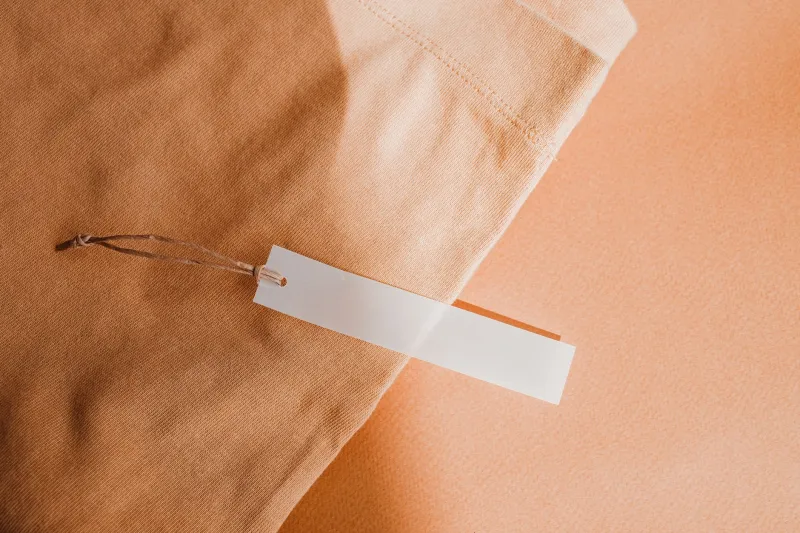
Authentic internal tags are sewn, not printed directly onto the fabric (on most product lines), and the stitching that holds them is tight and even. The font used on official Gary Jones labeling is consistent across product lines — spacing, kerning, and weight don't vary from piece to piece the way they do on counterfeits, where each batch sometimes looks slightly different.
Look for a lot number or production identifier. Official pieces carry internal coding that, while not always publicly decoded, is consistent in format and placement. If a tag looks like it was designed to look like a Gary Jones tag rather than actually be one, the inconsistencies will show up in the fine print.
Packaging: The Unboxing Experience Is Part of the Authentication
This is one of the most overlooked authentication signals. Counterfeiters focus almost entirely on the product itself — they rarely invest in accurate packaging reproduction because it's expensive and the secondary market buyer often discards it anyway.
Official Gary Jones products arrive with packaging that has its own design language. The tissue, the poly bag weight, the way items are folded — these are consistent across drops and reflect deliberate choices made at the production level. The inserts, if present, use specific paper stock and printing quality that's noticeably different from generic reproductions.
If you're buying from the secondary market and the packaging looks generic, that doesn't automatically mean the product is fake — packaging gets lost. But if someone is selling a "complete in original packaging" piece and the packaging looks off, treat it as a significant red flag.
The Smell Test (Yes, Really)
This sounds odd, but experienced collectors swear by it. Official Gary Jones garments have a clean, faintly chemical-but-not-overwhelming scent when new — the normal smell of freshly manufactured apparel from a quality facility. Counterfeit pieces, especially those produced in less regulated environments, often carry a sharper, more acrid odor that doesn't air out the same way.
This isn't a definitive test on its own, but combined with other markers, it's a useful additional data point.
When in Doubt, Ask the Community
The Gary Jones collector community is one of the most knowledgeable authentication resources available. If you're sitting on a piece and something feels off, post clear photos — tag detail, print close-up, full garment front and back — and let experienced collectors weigh in. The community has seen enough authentic and counterfeit pieces to spot discrepancies that even a careful individual examination might miss.
Knowing your merch at this level isn't just about protecting your investment. It's about respecting what the brand actually represents — the craft, the intentionality, and the direct connection between Gary Jones and every person who's wearing his name.