Vault Mode: Inside the World of Collectors Who Guard Their Gary Jones Pieces Like Gold

Photo: collector organizing and storing merchandise in climate-controlled room with shelves, via www.moveeast.com
Most people who order from garyjones.shop do it because they love the brand. They want to wear the hoodie, display the collectible, rep the limited drop. That's the whole point, right?
But spend any time in the deeper corners of the Gary Jones collector community, and you'll find a different kind of fan — one who boxes things up the moment they arrive, catalogs them in a spreadsheet, and thinks very seriously about humidity levels. These are the vault collectors, and their approach to Gary Jones merchandise is closer to how a serious art investor treats a signed Basquiat than how most people treat a piece of merch.
We talked to several of them. Here's what they know that you probably don't.
Why Preservation Has Become Its Own Hobby
The collector mindset isn't new — people have been obsessing over baseball cards, comic books, and sneakers for generations. But the personal brand space is relatively fresh territory, and Gary Jones collectors are essentially writing the playbook in real time.
"I started treating my pieces differently after I watched a limited run from a similar creator sell for four times retail on the secondary market," says Derek Paulson, a 34-year-old from Columbus, Ohio, who has been collecting Gary Jones items for over two years. "I realized I wasn't just buying merch. I was buying something that had a real ceiling — a fixed number of units in the world. Once I thought about it that way, the storage question answered itself."
Derek now keeps his most valuable pieces in a dedicated spare room he's converted into a climate-controlled storage space. Temperature stays between 65 and 70 degrees Fahrenheit. Humidity is maintained at around 50 percent using a standalone dehumidifier. Blackout curtains block UV exposure. It sounds extreme until you understand what UV light and moisture fluctuations do to fabrics, inks, and packaging over time.
"UV fading is the silent killer of collectibles," Derek says. "A piece that looks perfect today can look noticeably washed in five years if you're not protecting it from light exposure. Most people don't find out until it's too late."
The Authentication Question
As the secondary market for Gary Jones items has grown, so has the importance of being able to prove what you have is real. This isn't just about resale value — it's about the integrity of the collection itself.
Serious collectors are developing their own authentication practices, many borrowed from established markets like sneakers and trading cards. These include:
Photographing everything immediately upon arrival. Before anything goes into storage, collectors document the piece from every angle, including packaging, tags, and any unique identifiers like batch numbers or hand-signed elements. These photos are timestamped and stored in cloud backups.
Keeping original packaging intact. This sounds obvious, but it's worth emphasizing — a Gary Jones item in its original box or packaging can be worth significantly more than the same item loose. Collectors who open packaging carefully and keep all inserts, tissue paper, and branded materials are protecting future value.
Building a paper trail. Order confirmations, shipping notifications, and any communication related to the purchase are saved and organized. For high-value pieces, some collectors are even getting notarized statements of purchase.
"Provenance matters," explains Tanya Reeves, a Phoenix-based collector who focuses exclusively on signed and numbered Gary Jones items. "If I ever sell a piece — and I'm not planning to — I want the buyer to have no doubts about where it came from and when I got it. That documentation is part of what I'm selling."
The Display vs. Preserve Debate
Every serious collector eventually hits the same crossroads: do you show it off, or do you lock it down?
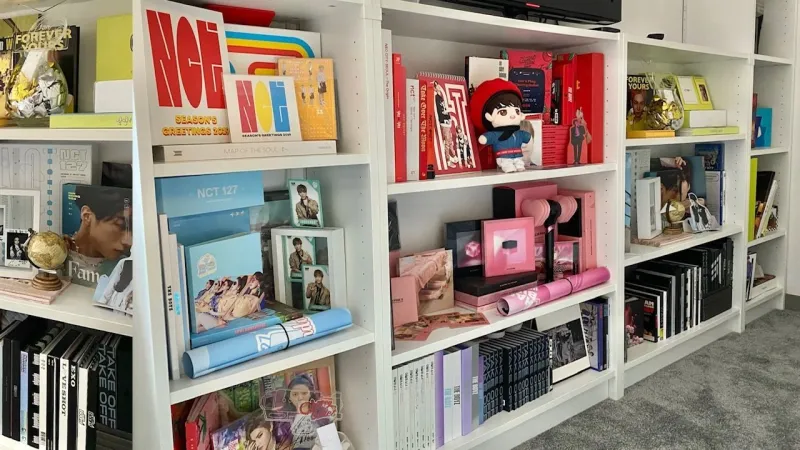
It's a genuinely interesting tension. Half the joy of collecting is the display — the wall-mounted piece, the shelf arrangement, the conversation starter when someone walks into your space. But display comes with trade-offs. Light exposure. Dust accumulation. The slow, invisible degradation that comes with being in an open environment.
Some collectors have found a middle ground. They buy two of everything — one to display, one to vault. It's not cheap, but for pieces they believe will appreciate significantly, the math makes sense.
"I call it my 'live copy' and my 'dead copy,'" says Marcus Tillman, a collector from Nashville with a dedicated display room. "The live copy is for me — it's framed, it's lit, it's part of my daily life. The dead copy is sealed, documented, and sitting in archival storage. One is for my enjoyment, one is for the future."
For those who can't or don't want to buy doubles, UV-protective display cases are an increasingly popular solution. These cases — originally designed for sports memorabilia — block up to 99 percent of UV light while still allowing the piece to be seen. Combined with controlled ambient temperature, they offer a reasonable compromise between preservation and display.
Insuring the Collection
This is the part most collectors skip — until they have a reason to regret it.
Standard homeowner's and renter's insurance policies typically cover personal property, but "collectibles" are often treated differently, with lower payout limits and stricter documentation requirements. Collectors who are serious about protecting their investment should look into specialized collectibles insurance, offered by companies like Collectibles Insurance Services or through riders added to existing policies.
"I got a quote and it was cheaper than I expected," Tanya says. "For the value of what I have, the annual premium is completely reasonable. The peace of mind alone is worth it."
The key to making any insurance claim work is — again — documentation. Photographs, receipts, appraisals where applicable. The more thorough your records, the smoother any claim process will be.
Building Your Own Vault Setup
You don't need to convert a whole room to start protecting your Gary Jones collection properly. Here's a practical starting point for collectors at any level:
- Archival-quality storage boxes for items not on display. Acid-free materials prevent the chemical degradation that breaks down fabrics and paper over time.
- A standalone hygrometer to monitor humidity in your storage area. Aim for 45–55 percent relative humidity.
- UV-blocking sleeves or cases for anything displayed near windows or artificial light.
- A dedicated cloud folder for all documentation, with photos organized by item and date.
- A simple spreadsheet tracking what you have, when you got it, what you paid, and estimated current value.
None of this is complicated. It's just intentional — and intention is exactly what separates a collection from a pile of merch.
The Bigger Picture
What the vault collectors understand that casual fans might not is that Gary Jones items exist in limited quantities by design. There will never be more of a sold-out drop than there were on release day. Every one that gets damaged, lost, or degraded makes the remaining ones slightly more significant.
Protecting your pieces isn't just about personal value. It's about honoring the scarcity that makes the whole thing matter in the first place.
And honestly? There's something kind of beautiful about that.